
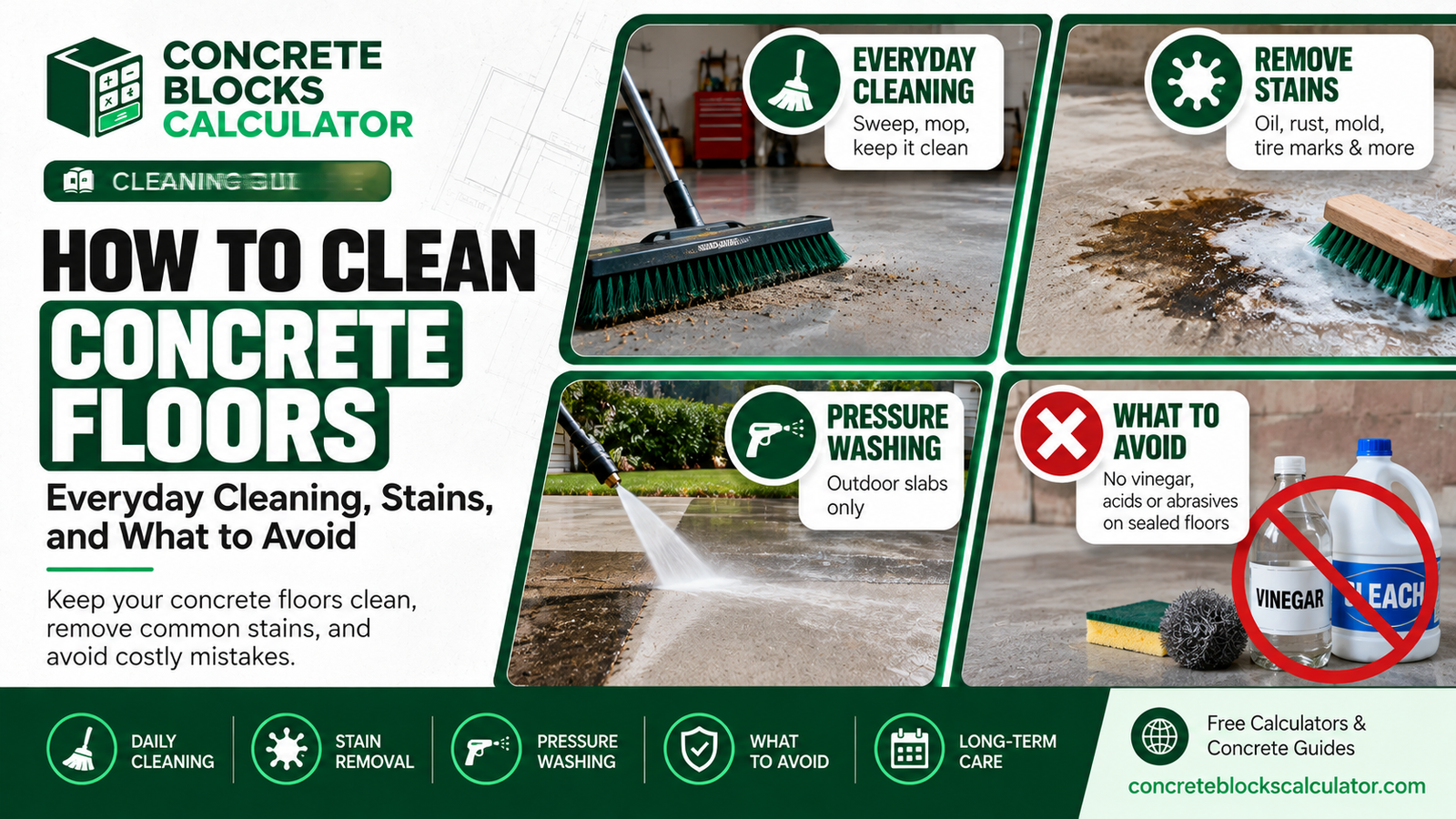
How to Clean Concrete Floors: Everyday Cleaning, Stains, and What to Avoid
Quick answer: The best way to clean concrete floors is to sweep or vacuum first, then damp-mop with warm water and a pH-neutral floor cleaner. Stains need a treatment matched to the stain type — not a stronger all-purpose cleaner. On sealed or polished concrete, never use vinegar, acids, or abrasive pads.
Building with blocks as well? Our Concrete Block Calculator works out how many blocks you need for a wall project.
Which method fits your floor?
Polished or sealed interior floor: mop only, pH-neutral cleaner, no acids, no abrasives.
Bare garage or basement floor: same mopping routine, plus degreaser and a stiff brush for oil and tire marks.
Outdoor slab, patio, or driveway: pressure washing is acceptable, kept moving and at a distance.
How do you clean concrete floors every day?
Sweep first, then damp-mop with a pH-neutral cleaner and warm water. That is the whole routine, and it works on garage, basement, and polished floors alike.
Sweep or vacuum first. Grit scratches concrete over time, especially polished floors. Get loose dirt, sand, and debris up before any water touches the floor.
Mop with a pH-neutral cleaner and warm water. A cleaner labelled pH-neutral (or made for concrete/stone floors) cleans without attacking the sealer. Wring the mop well — you want a damp mop, not puddles sitting on the floor.
Spot-clean spills as they happen. Most concrete stains are a race against absorption. A fresh spill wiped up now is a five-minute job; the same spill left for a week can become permanent.
Let the floor dry fully before replacing rugs or mats. Trapped moisture under mats feeds mildew and can discolor the floor.
Clean once a week for most homes, with spot-cleaning in between. High-traffic garage floors and workshops may need twice a week.
How do you remove stains from concrete floors?
Match the treatment to the stain — the wrong cleaner wastes effort or damages the floor. Always test any cleaner on a small hidden area first, and rinse thoroughly after every treatment, since leftover residue attracts dirt and dulls the finish.
| Stain | How to remove it |
|---|---|
| Oil and grease (garage) | Absorb fresh spills with cat litter or sawdust, sweep up, then scrub with a concrete degreaser or dish soap and hot water. For old, set-in stains, apply a degreaser poultice (paste) and let it sit before scrubbing. |
| Rust | Use a commercial rust remover made for concrete, or an oxalic-acid-based cleaner. Apply, let it work per the label, scrub with a stiff brush, and rinse. |
| Mold and mildew | Scrub with an oxygen-bleach solution and rinse well. For stubborn growth, diluted household bleach works — ventilate the room, wear gloves, and never mix bleach with ammonia or other cleaners. |
| Tire marks | Scrub with a degreaser and a stiff brush. Tire marks are rubber residue, so soap and water alone usually will not lift them. |
| Paint | Scrape off what you can, then use a paint stripper made for concrete on what remains. Fresh latex paint often comes off with hot soapy water and scrubbing if caught early. |
| Food and drink | Hot water and dish soap for most spills. Clean acidic spills (wine, juice, tomato) promptly — acids etch bare concrete if left sitting. |
Can you pressure wash concrete floors?
Outdoor concrete only — never interior or polished floors. On patios, driveways, and outdoor slabs, a pressure washer is fine if you keep the nozzle moving and at a sensible distance; holding it inches from the surface can etch lines into the concrete. Start with the widest fan tip and only narrow it if the dirt demands it.
The floor type decides the method:
Interior and polished floors: mop only. No pressure washer, no wire brush, no harsh chemicals. The finish is the floor — anything abrasive or acidic attacks it directly.
Garage and basement floors: the same mopping routine, plus degreaser for oil and tire marks. A stiff nylon brush is fine on bare (unsealed) concrete; use a softer brush on sealed floors.
Outdoor slabs, patios, and driveways: pressure washing is acceptable, as above.
What should you never use on concrete floors?
On sealed or polished concrete, never use vinegar, acids, undiluted bleach, or abrasive pads — and never seal new concrete before it cures.
Vinegar and acidic cleaners. They dull polished finishes and wear down sealers. Acceptable on bare outdoor concrete in a pinch, wrong for a finished floor.
Undiluted bleach, or bleach mixed with anything. Diluted bleach has its place for mold (ventilated, gloved), but undiluted bleach discolors, and mixing bleach with ammonia creates toxic gas.
Abrasive pads and wire brushes on finished floors. They scratch the sealer and the polish. Save them for bare outdoor concrete.
Sealer or coating on new concrete. Fresh concrete needs its full 28-day cure before you seal or coat it. Sealing early traps moisture and the coating can fail.
How do you keep concrete floors clean long-term?
Reseal every few years, catch spills and grit early, and fix damp spots at the source.
Reseal every 2–5 years. Sealed garage and basement floors typically need a fresh coat in that range depending on traffic. When water stops beading and stains start sinking in fast, the sealer is worn.
Spotted cracks while cleaning? Most hairline cracks are normal.
If cleaning and resealing no longer help, resurfacing may beat replacing the floor.
Use mats where it matters. A mat under a car catches oil before it reaches the floor, and a doormat at the entrance stops most grit at the door.
Fix the water first. If one area keeps growing mildew or staying damp, the problem is drainage, a leak, or moisture coming up through the slab itself. No cleaner fixes standing water.
The bottom line
Sweep, mop with a pH-neutral cleaner, treat stains by type, and keep acids and abrasives away from finished floors. Most concrete floors stay clean on that routine alone — the expensive mistakes come from the wrong cleaner, not from cleaning too little. Planning a new floor? Run the numbers with our concrete slab calculator first, and give it the full 28 days to cure before you seal it.
Frequently Asked Questions
How often should I clean concrete floors?
Sweep and mop weekly for most homes, with spot-cleaning as spills happen. Garages and workshops may need twice-weekly cleaning.
How do you clean polished concrete floors?
Dust-mop to remove grit, then damp-mop with a pH-neutral cleaner. No vinegar, no acids, no abrasive pads, and no pressure washer — the polish is the finish, and anything harsh attacks it directly.
Can I pressure wash concrete floors?
Outdoor slabs, patios, and driveways, yes — keep the nozzle moving and at a distance so it does not etch the surface. Never pressure wash interior or polished floors.
Can I use bleach on concrete floors?
Diluted bleach works for mold and mildew with ventilation and gloves, and never mixed with ammonia. For routine cleaning, a pH-neutral cleaner is safer and better.
Is vinegar safe on concrete floors?
On bare outdoor concrete, occasionally. On sealed or polished floors, no — vinegar and other acids dull the finish and wear the sealer.
How do I remove old oil stains from a garage floor?
Absorb what you can, then scrub with a concrete degreaser and hot water. For set-in stains, apply a degreaser poultice, let it sit, scrub with a stiff brush, and rinse.
How do I remove rust from concrete?
Use a commercial rust remover made for concrete or an oxalic-acid-based cleaner, let it work per the label, scrub with a stiff brush, and rinse. Test on a hidden spot first.
When should I reseal a concrete floor?
Typically every 2–5 years depending on traffic. When water stops beading and stains soak in quickly, the sealer is worn and it is time for a fresh coat.



2 Comments