Poured Concrete vs Block Walls: An Honest Comparison
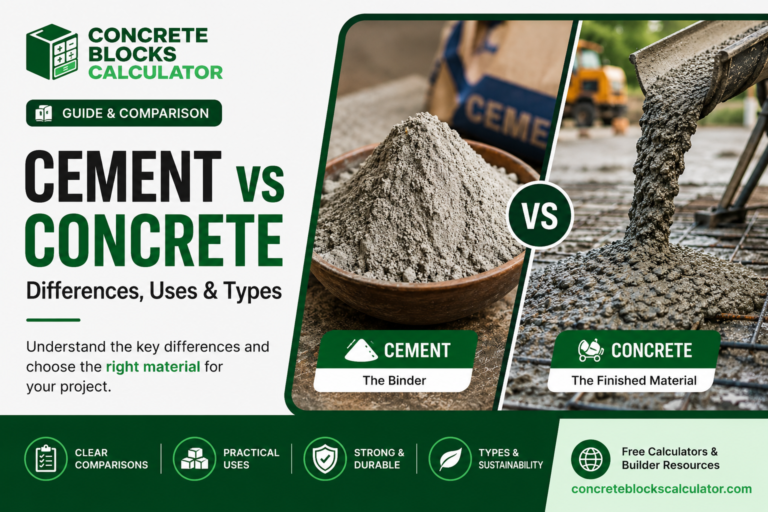
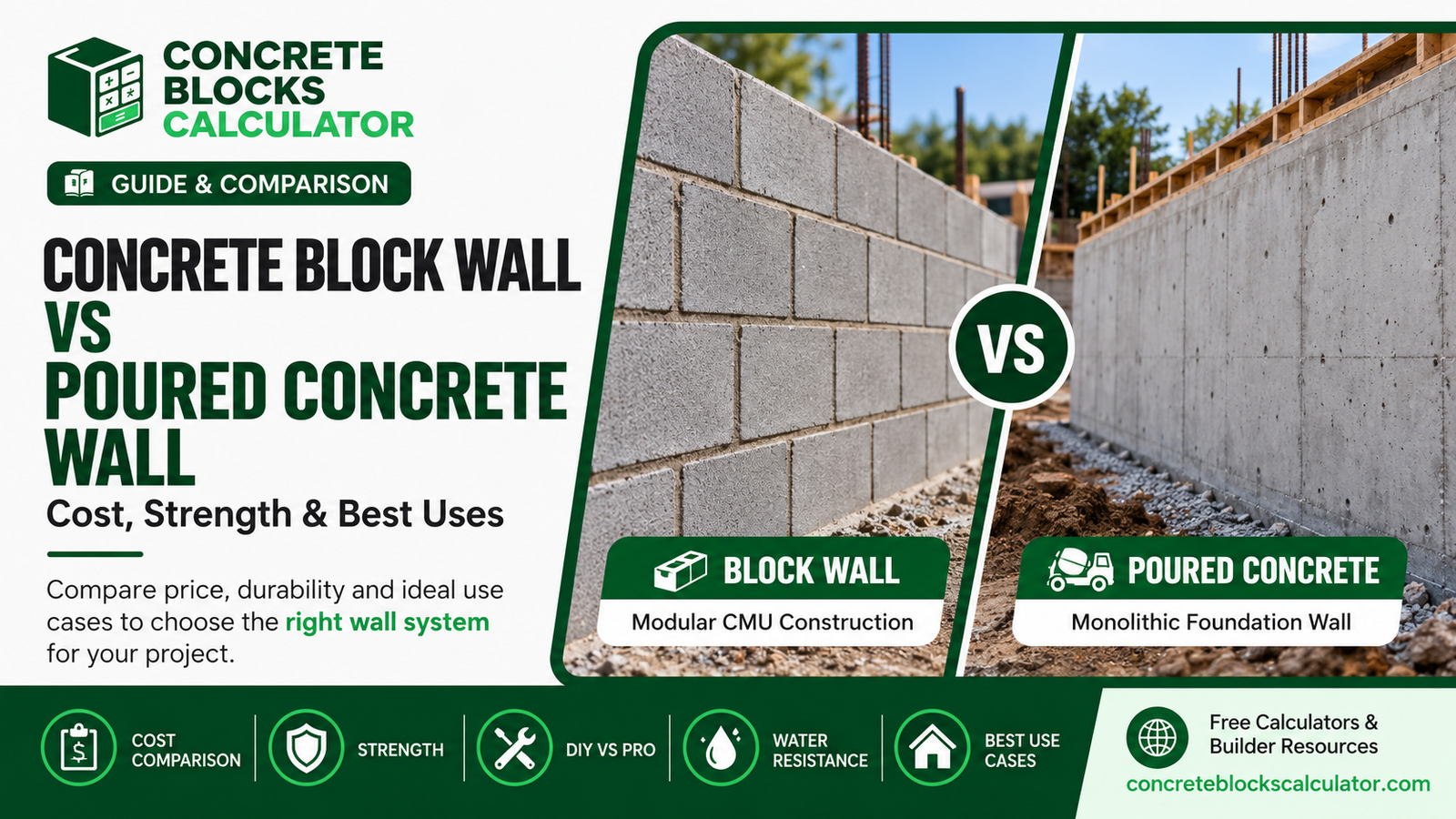
Neither is always cheaper or better — it depends on the wall. Block walls usually win for small projects and DIY: lower material cost, no forms, easy to modify. Poured concrete wins for large foundation walls: potentially efficient for larger formed walls, while performance against water and lateral pressure depends on the engineered system, detailing, and drainage. On installed cost per square foot the two are often closer than people expect, so the decision usually comes down to project size, site access, and who’s doing the work.
Side-by-side comparison
| Concrete block wall | Poured concrete wall | |
|---|---|---|
| Installed cost | $12–$25/sq ft typical | Often slightly higher per sq ft for the same wall; gap varies by region |
| Materials (DIY) | $3–$6/sq ft | Concrete + forms + rebar (forms are the wild card) |
| Strength | Excellent compression; needs rebar + grout for lateral loads | Performance depends on reinforcement, design, waterproofing, joints and drainage |
| Speed | Slow — block by block | Fast once forms are set; slow to set up |
| DIY-friendly | Yes — the classic DIY masonry project | Rarely — formwork and ready-mix timing punish beginners |
| Repairs/changes | Easy — remove or add blocks | Hard — cutting cured concrete is miserable |
| Finish options | Paint, stucco, veneer, split-face block | Stamping, staining, board-formed textures |
Cost: the honest picture
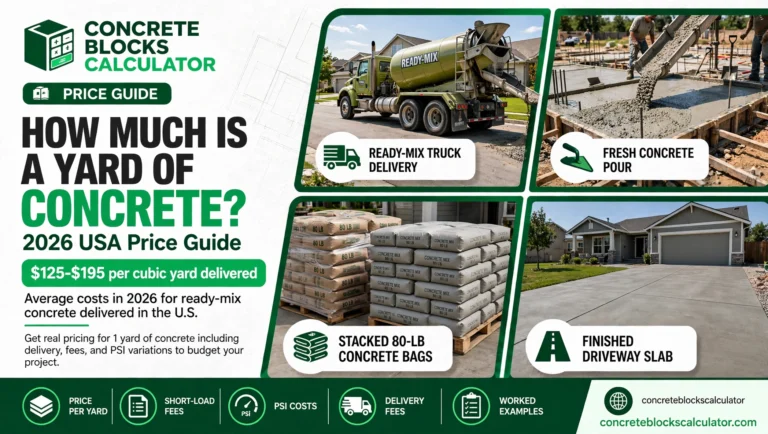
For a standard garden or freestanding wall, block is usually the cheaper bid — materials are commodity-priced and any mason can lay them. For basement and foundation walls, poured concrete is often price-competitive because a crew can form and pour in days what takes weeks in block, and contractors price that speed in. The concrete itself is priced by the yard — see how much a yard of concrete costs in 2026. Published cost guides reflect this overlap: both wall types land in the broad $15–$35+/sq ft installed band depending on height, region, and structural requirements — which is exactly why you should get quotes for both methods on any job big enough to hire out. For the full numbers, see our concrete block wall cost breakdown.
When to choose block
- Garden, landscape, and freestanding walls under ~4 ft
- DIY projects
- Jobs where you may add openings, gates, or extensions later
- Sites where a ready-mix truck can’t reach (blocks carry in by hand)
When to choose poured
- Basement and foundation walls (water resistance matters most here)
- Tall retaining walls with serious soil pressure
- Large commercial-scale walls where forming + pouring beats laying thousands of units
- When the schedule is tight and a crew is available
A note on water
This is poured concrete’s biggest real advantage: a monolithic wall has no mortar joints, and joints are where water finds its way in. A block foundation can be made watertight — grout-filled cores, waterproof coatings, and good drainage do the job — but it takes more steps and more care. If your site has a high water table, price the waterproofing into the block bid before comparing.
Frequently asked questions
Is it cheaper to pour a concrete wall or use blocks?
For small walls, blocks are usually cheaper. For large foundation walls, the installed prices often converge — get both quotes.
Which wall is stronger?
Poured concrete has the edge in lateral strength and water resistance. A properly reinforced, grout-filled block wall (rebar + filled cores per code) is fully code-compliant for foundations and load-bearing work — strength is rarely the deciding factor in residential jobs.
Can I DIY a poured concrete wall?
Small pours (a short garden wall, a footing) — yes, with rented forms. A full foundation wall — no. Formwork blowouts and cold joints are expensive failures; that’s pro work.
How long does each last?
Both last 50–100+ years when built right. Failure almost always comes from water, bad footings, or missing reinforcement — not from the choice between block and poured.