Cement vs. Concrete: What’s the Difference?
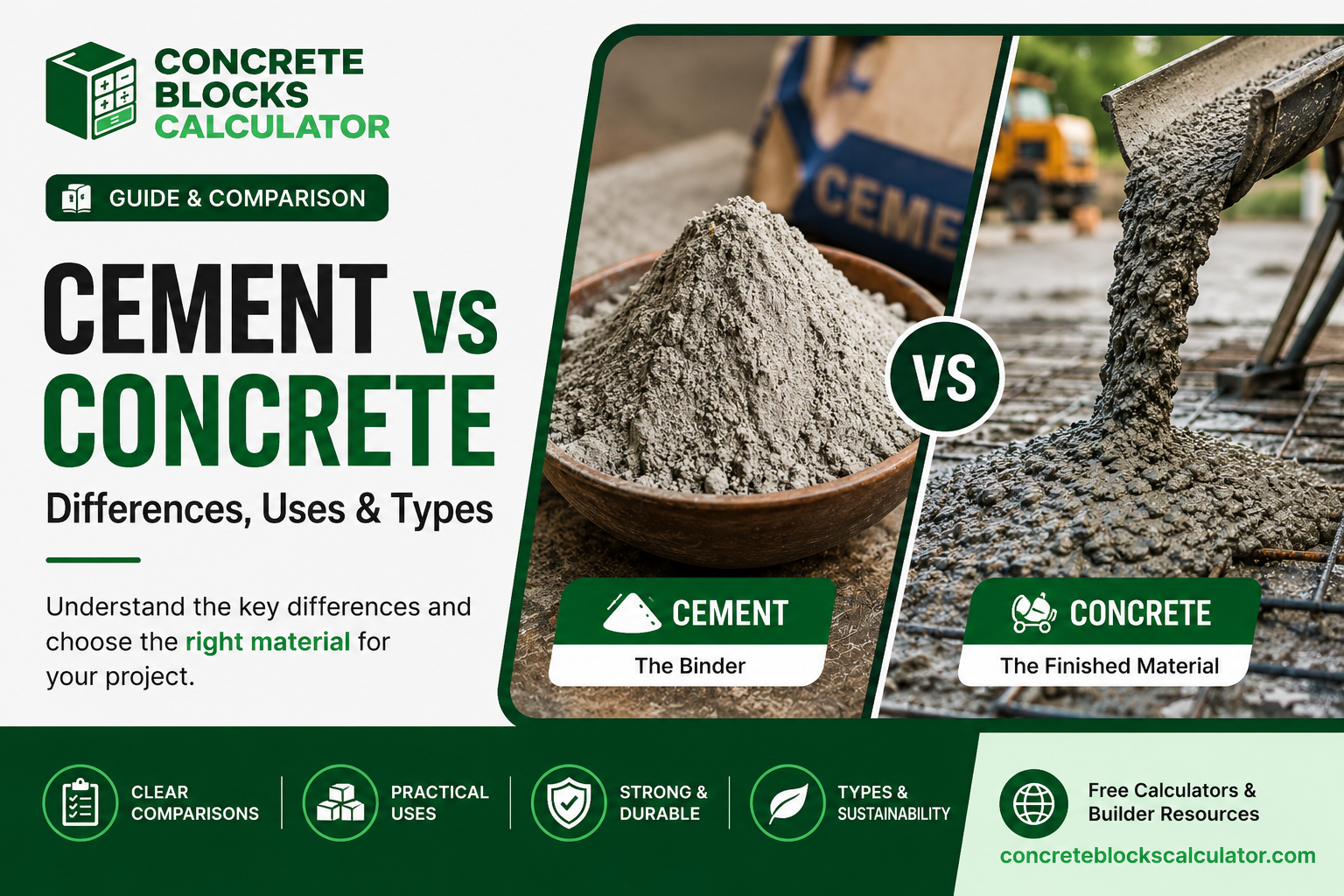
Cement is the powdered binder — roughly 10–15% of a concrete mix by volume. Concrete is the finished material made from cement + water + sand + coarse aggregate (gravel / stone). Mortar is cement (often with lime) + sand + water, mixed without coarse aggregate, used to bond bricks and blocks. If you’re pouring a slab, driveway, or patio, you need concrete — not a bag of straight cement. Think of it this way: cement is to concrete what flour is to bread.
You’ve Been Using These Terms Wrong — Here’s the Real Difference
If you’ve ever started a home project and paused to ask what the difference between cement and concrete actually is — you’re not alone. These terms get used interchangeably all the time, but they mean very different things, and mixing them up can send you to the hardware store with the wrong material. Understanding the gap between the two early on helps you choose the right material, avoid frustration, and build something that genuinely holds up over time.
At its most basic: cement is a fine powder that acts as a binding ingredient, while concrete is the finished material made by mixing cement with water, sand, and gravel. Cement is just one part of the equation — concrete is the complete mix that creates a strong, usable surface. The analogy that makes it stick: cement is like flour, and concrete is like baked bread. Neither flour alone nor cement alone gets you to the finished product.
Cement and concrete are two of the most common construction materials around, yet they’re regularly confused even by people deep into a project. Contractors, engineers, and project managers should understand the differences between cement vs. concrete so they can select the right material for the right purpose every time — and so can you.
| Cement | Concrete | |
|---|---|---|
| What it is | A binding agent, an ingredient (not a standalone building material) | The finished building material |
| Made from | Limestone and clay, heated to ~1,450°C to form clinker, then ground into fine powder | Cement, water, and aggregates (sand and gravel), sometimes with admixtures or fibers |
| Its role | Acts as the paste that binds the mix together | The end product you design, place, and cure |
| How it hardens | Reacts chemically with water (hydration). Portland cement is hydraulic | The cement paste hydrates and binds the aggregates into one solid mass |
| Where you see it | Rarely used on its own — it is a component of other materials | Foundations, slabs, bridges, tunnels, high-rise buildings, dams, pavements |
Why Getting This Wrong Can Cost You
The confusion between cement and concrete has stuck around so long because the two are always used together — cement is a key ingredient inside every concrete mix, which makes them easy to blur into one thing. But they are not one thing. Concrete is a complete material system: cement plus water plus aggregates like sand and gravel, all working together to produce a single product with unique performance outcomes that neither cement nor any other individual ingredient could deliver alone.
Choosing the right material shapes project performance, long-term durability, and even environmental impact. Construction professionals who understand the core differences are better positioned to make informed decisions about material selection — whether they are selecting a cement type for mortar, specifying a concrete mix for a highway, or working through the sustainability trade-offs of a large-scale build.
What Is Cement?
Cement is a dry, powdery material — a fine gray powder — that acts as a binding agent when mixed with water. The moment water meets cement, a chemical reaction begins, turning it into a paste that gradually hardens. On its own, cement cannot handle structural loads or outdoor wear — it works best as part of a system of mixes rather than as a standalone material.
How Cement Is Made
Cement production starts with raw materials — primarily limestone, clay, shale, iron ore, and other minerals — obtained through mining. These go through a heating process at 1,450°C (2,640°F), where they are crushed and combined to produce lumps of clinker. Manufacturers then add minerals like calcium sulfate, and sometimes aluminum and iron, before a grinding process turns everything into fine powder. The clinker is finely ground and blended with gypsum to control setting time, yielding hydraulic cement — a material that hardens through a chemical binding reaction when combined with water.
Role of Cement in Construction
In the construction industry, Portland cement is the most common type on the market. Portland is a generic term, not a brand name, used to differentiate the main cement types. Ordinary portland cement (Type 1 cement) is the standard for general concrete construction. Because it is hydraulic, it chemically reacts with water to deliver excellent binding properties — the glue that binds every concrete and mortar mix.
Cement is not suitable as a construction material on its own, but its versatility in smaller applications is real. Cement-based mixes offer strong bonding capabilities for brick and block, and give homeowners the control, detail, and smooth finish that repairs and finishing tasks need.
What Is Concrete?
Definition and Basic Properties
Concrete is the most widely used construction material in the world. Unlike cement, which is just an ingredient, concrete is the finished building material you actually pour, shape, and build on. It is extremely durable, adapts to project needs, and performs well in real-world conditions — including temperature changes, moisture, and repeated use. Once it sets and hardens, it cures and continues to gain strength over time, making it reliable across a wide range of applications from patios, driveways, and slabs to sidewalks, roads, bridges, and building foundations.
Composition of Concrete
Concrete is a composite material built from three basic components: Portland cement, water, and aggregates such as sand, gravel, and crushed stone. According to the American Concrete Institute, the standard composition is cement, aggregates, and water — with or without admixtures, fibers, or other cementitious materials. The combination is stronger and more durable than cement alone.
The performance of any concrete mix depends on the water-to-cement ratio, the type of aggregates used, and curing conditions. For projects where consistency is critical, ready-mix concrete — delivered directly to the jobsite — is the standard choice. Admixtures can also be added to modify setting times and improve workability.
How Cement and Concrete Are Related
The relationship is straightforward: cement is one of concrete’s three basic components, not a building material in its own right. Cement is the paste that binds the aggregates together; concrete is the finished material that results from that combination. Its adaptability and sustainability make it versatile enough for residential projects, large-scale structural builds, and everything in between.
Cement Types Explained
Ordinary Portland Cements (ASTM C150)
Portland cement types fall under ASTM C150 — the standard most consumer education and bag label references point to. These are hydraulic materials that react with water to harden and strengthen.
| Type | Best For | Notes |
|---|---|---|
| Type I | General-purpose concrete | Everyday default for most U.S. applications |
| Type II | Moderate sulfate exposure, mass concrete, marine environments | Often sold as Type I/II — meets both classifications |
| Type III | High early strength, fast turnaround, cold-weather work | Gains strength quickly |
| Type IV | Low heat of hydration for mass concrete pours | Not currently made in the U.S.; limited availability |
| Type V | High sulfate resistance | For soils and groundwater with elevated sulfate content |
Type I/II has been the most widely available Portland cement in the U.S. per the American Cement Association (ACA).
Blended Hydraulic Cements (ASTM C595)
Blended hydraulic cements combine ordinary Portland cements (OPC) with supplementary cementitious materials (SCMs) — such as limestone, slag, fly ash, or pozzolans — to improve performance, reduce CO₂ emissions, and lower overall environmental impact.
| Type | Description | Key Benefit |
|---|---|---|
| Type IL ★ Mainstream | Portland-limestone cement (PLC) — 5–15% interground limestone | Lowers CO₂ while maintaining structural integrity |
| Type IP | Portland-pozzolan cement — incorporates fly ash | Improves durability and chemical resistance |
| Type IS | Portland-blast-furnace slag cement | Improves workability and reduces permeability |
| Type IT | Ternary blended cement — several SCMs combined | Optimizes performance and sustainability |
The Third Term: Mortar
What Mortar Is — and Why It Gets Confused
Most consumer conversations jump between cement and concrete and skip mortar entirely. According to ACI terminology, mortar is a mixture of cement paste and fine aggregate. In store-bought form, Quikrete describes Mortar Mix as a blend of masonry cement and graded sand. Sakrete describes Type N mortar as a preblended mix of sand and masonry cement — or sand, lime, and portland cement.
The key operational difference: mortar is a sand-based masonry bonding material that does not include coarse gravel or stone. Conventional concrete gets its strength from an aggregate skeleton of coarse gravel and stone. Mortar uses only fine sand, which makes it a binder for masonry units — not a structural material on its own.
The retail aisle makes the confusion worse. Home Depot labels its entire category “Concrete, Cement and Masonry”, and most hardware stores stock Portland Cement, Concrete Mix, Mortar Mix, and Mason Mix bags side by side.
Quick Comparison: Cement, Concrete, and Mortar
| Material | What It Is | Typical Composition | Strength at 28 Days | Common Uses |
|---|---|---|---|---|
| Cement | Powdered hydraulic binder | Ground clinker + gypsum + limestone | Not rated as a finished material | Ingredient in concrete, mortar, stucco, grout |
| Concrete | Finished structural composite | Cement + water + sand + gravel/crushed stone (± admixtures) | 3,000–4,000 psi (residential); ~4,000 psi (bagged) | Slabs, driveways, sidewalks, footings, foundations, patios |
| Mortar | Masonry bonding material | Cementitious binder + sand + water (± lime); no coarse aggregate | Type N: min. 750 psi · Type S: min. 1,800 psi | Brick, block, stone, veneer, tuckpointing, stucco base coats |
Sources: ACI terminology · American Cement Association · Quikrete and Sakrete product pages.
Practical Rules for Homeowners
Cement vs. Concrete: Side-by-Side Comparison
Composition
Cement — specifically portland cement — is a fine gray powder produced by heating limestone, shale, iron ore, and clay in a kiln, then grinding clinker with gypsum, limestone, and other materials. Lime and silica make up about 85% of the ingredients, and calcium sulfate is added to control setting. Cement on its own is purely a binding ingredient — a fine binding powder with no structural role.
Concrete is built from that powder plus three more things: water, aggregates (sand, gravel, stone, or crushed stone), and sometimes admixtures, fibers, or pigments. Cement makes up only 10% to 15% of concrete by volume. When cement and water form a paste, that cement paste binds the sand and gravel into a rock-like mass — which is concrete.
Side-by-Side: Key Differences at a Glance
| Property | Cement | Concrete |
|---|---|---|
| Composition | Limestone, clay, calcium sulfate, sometimes aluminum and iron | Cement, water, aggregates (sand, gravel, stone), sometimes admixtures or fibers |
| Physical form | Fine gray powder | Wet mixture that hardens into a solid mass |
| Function | Binding agent (glue) | Structural building material |
| Strength | Weak — no structural strength on its own | Strong and load-bearing — gains compressive strength over 28 days through hydration |
| Common uses | Ingredient in concrete, mortar, grout, plaster, repair (not structural) | Foundations, slabs, columns, pavements, bridges, dams, high-rises, patios, driveways |
| How it sets | Chemical reaction with water when mixed into a paste | Hydration of cement paste bonding with aggregates as it cures and hardens |
Strength and Properties
The American Concrete Institute (ACI) defines cement as a material with adhesive properties and cohesive properties capable of binding aggregate particles into a compact whole — but that bonding role only activates inside a larger mixture. Alone, cement is weak and not structural. Concrete, by contrast, is a composite — a complete building material that is strong, load-bearing, and cures and hardens through hydration over 28 days, gaining compressive strength the whole time.
Typical Applications
| Material | Common Uses |
|---|---|
| Cement | Ingredient in concrete, mortar, grout, plaster, repair (not structural) |
| Concrete | Foundations, slabs, columns, pavements, bridges, dams, high-rises, patios, driveways |
What Is Each Material Used For?
Cement: The Ingredient Behind the Scenes
Cement is rarely used as a standalone building material — and that is by design. Its value comes from its adhesive properties and binding properties, which make it indispensable as an addition to other materials. Cement is the adhesive and binding force inside concrete, mortar, cement-based overlays, and concrete patching materials. Without it, none of those materials hold together.
Concrete: The Finished Material That Does the Heavy Work
Concrete is the most widely used construction material in the world, serving both residential and commercial applications at every scale. Because it is strong and can be poured into forms or molds to take almost any shape, it covers an enormous range of uses — from roads and buildings to stamped concrete driveways, patios, and sidewalks. Indoor applications include decorative flooring, countertops, sinks, and bathtubs.
Cement vs. Concrete in Real DIY Projects
Patios need to handle regular foot traffic, shifting weather, and long-term exposure to the elements — which is exactly why concrete is the right call. It creates a stable, durable surface that holds its shape over time, and with proper installation it delivers a clean, finished look that is easy to maintain.
Driveways demand even more strength because of the weight of vehicles and repeated use over years of service. Concrete can handle heavy loads, resist wear, and manage seasonal changes including freezing and thawing that would compromise weaker materials quickly.
Slabs and footings — whether for shed bases or other structural supports — require strength and stability above everything else. Concrete provides the load-bearing capacity needed to support structures, prevent shifting, and stop settling before it starts.
Free Calculators for Your Concrete Projects
When to Use Cement vs. Concrete
The Simple Rule That Clears It Up
Choosing between cement and concrete gets much easier once you focus on what the project needs to do. The simple rule to keep in mind: if your project needs structure and strength, use concrete. If it needs bonding or finishing, reach for a cement-based mix.
Concrete is the right choice when a project requires real strength, durability, and long-term performance — any surfaces that need to support weight or stand up to outdoor conditions: patios, driveways, slabs, and footings.
Cement-based products are ideal for smaller, targeted tasks where precision, bonding strength, and surface finish matter most: bonding materials together, repairing cracks, or applying a smooth finish to a surface.
Pricing & Buying Guide (2026)
Properties and Cost Comparison
| Product | What It Contains | Typical Bag Size | Approx. Cost (2026) | Best For |
|---|---|---|---|---|
| Portland Cement | Cement only — no sand, no gravel | 47–94 lb | $12–$20/bag | Custom concrete, custom mortar, stucco, grout |
| Concrete Mix | Cement + sand + gravel/stone | 50–80 lb | $6–$10/bag | Slabs, footings, posts, steps, sidewalks, driveway repairs |
| Mortar Mix / Mason Mix | Cementitious binder + sand, no coarse stone | 60–80 lb | $7–$12/bag | Brick, block, stone joints, veneer, tuckpointing |
| Sand Mix / Topping Mix | Cement + sand — fine, no coarse aggregate | 50–60 lb | $7–$11/bag | Patches, toppings, shower pans, overlays under 2 inches |
| Ready-Mix Concrete | Complete cement + sand + gravel system | Per yard | $150–$200+/cu yd | Large slabs, foundation walls, patios, driveway repairs |
Sources: Quikrete and Sakrete Portland Cement product pages, Concrete Mix data sheet, Mortar Mix, Sand Topping Mix product pages, mortar guidance, and sand-mix guidance.
Regional Ready-Mix Pricing Snapshot
| Region | Approx. Price per Cubic Yard |
|---|---|
| Northeast | $165–$210 |
| Southeast | $140–$185 |
| Midwest | $135–$180 |
| Southwest | $145–$190 |
| West Coast | $175–$220 |
Prices reflect standard residential mixes (3,000–4,000 psi). Specialty admixtures, fibers, or accelerated curing schedules add cost. Always get local quotes — ready-mix concrete pricing is highly regional and changes with fuel and material costs.
How to Read the Bag
The fastest way to avoid buying the wrong bag is to read the product name on the label, not the aisle nickname the store uses. Most people walk into a hardware store looking for “cement” and come home with the wrong thing because every bag in that aisle looks similar.
- Portland Cement — cement only; no sand, no gravel. Buy for custom concrete, custom mortar, stucco, or grout. A homeowner who buys Portland Cement for a slab still needs sand and gravel added before they have anything usable.
- Concrete Mix — cement + sand + gravel; just add water. Designed for pours 2 inches thick or more, including foundation walls, footings, sidewalks, slabs, patios, and driveway repairs (per Quikrete data sheet).
- Mortar Mix / Mason Mix — cementitious binder + sand; no coarse stone. Right for brick, block, stone joints, veneer, and tuckpointing. Do not use for driveways, slabs, or any pour requiring coarse aggregate.
- Sand Mix / Topping Mix — cement + sand; fine, no coarse aggregate. Works for patches, toppings, shower pans, and overlays under 2 inches thick. Not for thick structural slabs.
Quick Reference: What the Bag Label Means
| Bag Label | Contains | Buy For | Do NOT Use For |
|---|---|---|---|
| Portland Cement | Cement only — no sand, no gravel | Custom concrete, custom mortar, stucco, grout | Ready-to-pour driveway or slab without adding sand and gravel |
| Concrete Mix | Cement + sand + gravel/stone | Slabs, footings, posts, steps, sidewalks, driveway repairs | Brick joints or thin topping/overlay work |
| Mortar Mix / Mason Mix | Cementitious binder + sand, no coarse stone | Brick, block, stone joints, veneer, tuckpointing | Driveways, slabs, coarse-aggregate pours |
| Sand Mix / Topping Mix | Cement + sand — fine, no coarse aggregate | Patches, toppings, shower pans, overlays under 2 inches | Thick structural slabs needing coarse aggregate |
Sustainability: Type IL Cement and Environmental Impact
Environmental Considerations for Cement
For consumers trying to understand the environmental angle, the key point is simple: cement is usually the carbon-heavy part of any concrete mix. Current U.S. industry-average Environmental Product Declarations (EPDs) show that manufacturing impacts are driven primarily by energy use and clinker production — and clinker content largely defines the environmental profile of the final cement. The more clinker in the mix, the higher the carbon cost.
Environmental Considerations for Concrete
Durability matters just as much as carbon footprint when evaluating concrete’s environmental cost. NRMCA guidance is direct: the primary intent of durability requirements is to minimize permeability to water and dissolved chemicals — typically by limiting the water-cementitious ratio (w/cm) and requiring adequate strength. A durable concrete mix that lasts through its full exposure lifecycle has a far lower real-world carbon footprint than a cheaper mix that fails early and needs replacing.
Type IL and Blended Cement Innovations in 2026
Type IL — also called portland-limestone cement (PLC) — is a blended hydraulic cement under ASTM C595, and it has moved from niche to mainstream general-use across the U.S. market.
| Cement Type | CO₂e per Metric Ton | Clinker Content |
|---|---|---|
| Traditional portland cement | 919 kg CO₂e | Higher than PLC |
| Type IL (PLC) | 844 kg CO₂e | 82.7% average |
| Reduction | ~8% lower cradle-to-gate global warming potential | Lower clinker content = lower carbon footprint |
The American Cement Association (ACA) states that PLC delivers performance similar to Type I while reducing CO₂ by up to 10%. All 50 state DOTs and the District of Columbia now permit its use. The ACA confirmed that PLC’s U.S. market share surpassed traditional portland cement in June 2023 — making it the more common option on shelves than Type I today. The ACA states all base blended cement types, including Type IL, are suitable for general concrete applications. The low-carbon path and the right material path are now the same path.
Common Misconceptions About Cement and Concrete
“Cement and concrete are the same thing.”
They are not the same. Cement is the binder — a powder that, when combined with water, sand, and coarse aggregate, becomes a composite called concrete. This is standard ACI terminology, not pedantry.
“My driveway is made of cement.”
Technically, a driveway, sidewalk, footing, or slab is concrete — it contains cement, but it is made of concrete. The structure contains cement but is made of concrete, because it has sand, stone, and hydrated cement paste all working together.
“Mortar and concrete are interchangeable.”
They are not interchangeable. Mortar is a fine-aggregate masonry mix — it has no coarse aggregate. Concrete contains coarse aggregate and is engineered for slabs, footings, and structural placements. Neither Quikrete nor Sakrete markets mortar for driveways or slabs.
“You can pour a structural slab with cement alone.”
Wrong material choice. Cement is the ingredient you add to aggregate and water to make concrete. For a slab, footing, sidewalk, or driveway, the correct finished material is concrete — either bagged or truck-delivered.
“Concrete hardens because it dries out.”
The critical mechanism is hydration — cement chemically reacts with water and binds the aggregate into a solid mass. This is not air-drying like paint. Curing conditions — specifically moisture and temperature — matter enormously because the reaction needs the right environment to complete properly.
“More water always makes better concrete.”
Usually the opposite. Excess water reduces strength and durability, and introduces the risk of cracking, dusting, and scaling. NRMCA ties durability directly to permeability control via appropriate w/cm and curing.
Frequently Asked Questions
No — they are not the same. Cement is a fine powder that acts as a binder, making up roughly 10% to 15% of a concrete mix by volume. Concrete is the finished material made by combining cement with water, sand, and stone — a composite material used across all types of construction. Cement is an ingredient in concrete, not a substitute for it.
Concrete is the engineered structural material that gets a strength rating in PSI — cement alone is not how slabs or driveways are specified. On its own, hardened cement is brittle and cannot carry structural loads. Concrete gains compressive strength as cement hydrates and bonds with aggregates, typically reaching design strength around 28 days after placement.
Yes, in limited cases. Cement mixed with water alone can form a thin paste used as a grout or for small binding tasks. It is rarely used alone as a building material and is not suitable for structural applications on its own. Its real value comes from its adhesive and binding properties when added to concrete, mortar, cement-based overlays, and concrete patching materials — where it becomes indispensable.
Mostly shorthand. A common misconception treats concrete as wet cement, so people mistakenly say “cement sidewalk” or “cement driveway” when they are really talking about concrete. The store aisle is labeled “Concrete, Cement and Masonry” with products sitting side by side, and the terminology gets flattened in everyday speech. The accurate version: a sidewalk or driveway contains cement but is made of concrete.
Portland cement is the most common type of cement used in concrete. The name refers to its resemblance to Portland stone quarried in England — it is not a brand name. It is a hydraulic cement, meaning it hardens through a chemical reaction with water. Type I/II on a cement bag means the product meets both Type I and Type II requirements — historically the most widely available Portland cement in the United States. Type IL (PLC) is a blended hydraulic cement under ASTM C595 with roughly 8–10% less CO₂ than traditional portland cement, and is widely accepted for general concrete applications.
A typical concrete mix contains 10% to 15% cement by volume. The exact amount depends on the water to cement ratio (w/c ratio). Generally, a higher percentage of cement raises concrete strength, but the optimal balance of all components is what delivers the right strength, durability, and performance.
Not always — and you can easily overdo it. While more cement does help improve concrete strength, too much cement makes the mix harder to work with and leads to poor bonding between cement and aggregates. Finding the optimal balance of components is what actually drives durability and performance — not just adding more cement.
You cannot eliminate all the cement in concrete, but it is possible to replace up to 40% of the cement with fly ash — a byproduct of coal combustion used as a mineral admixture. Like cement, fly ash acts as a binding agent when mixed with water, while increasing concrete strength, reducing permeability, and making the mix easier to place and finish.
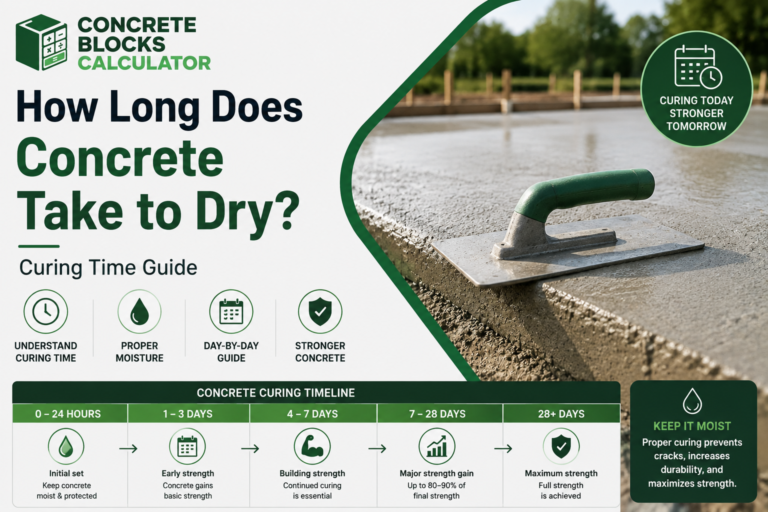
The accurate term is cure, not dry. Cement hydrates with water through a chemical reaction — not simple drying like paint. Concrete typically reaches design strength around 28 days after placement. Keeping it moist for several days through proper curing significantly improves both strength and durability.
Yes — always. The vehicles commonly called cement trucks are ready-mix concrete trucks. They deliver concrete from a batch plant to the pour site. What they carry is concrete — which contains cement — not cement itself. Cement trucks and concrete trucks are the same vehicles; only the name is wrong.